No More Drops
A few months ago, I took my gravel bike apart and put the frame up in the attic. I liked riding it, but I rode it less and less.
Earlier in the year I'd been thinking a lot about handlebars, mostly as an aerodynamics thing. My gravel bike was about going fast(er) or at least far(ther) and we all know aero is everything. Seeing some recent hype videos about how higher drops are even faster I tried a bunch of high setups, since that could potentially be a win-win with a fast high hoods position, and decent descending on the drops. I also tried a short stem, long reach bars (Nitto Noodles) and the longest hoods available (TRP Hylex). But nothing really stuck. Anything that was supposed to be fast and was optimized for the fast position felt totally dumb the rest of the time.
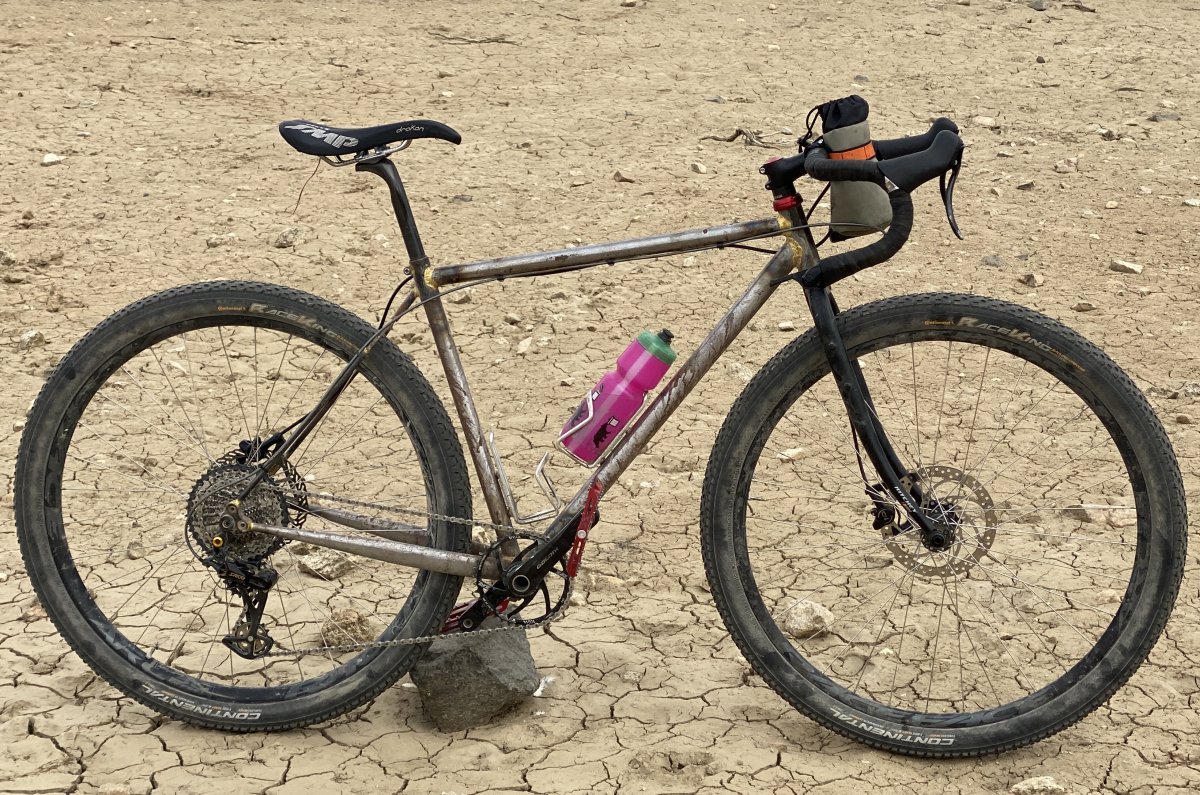
I also tried out Jones bars, since they give you a wider stance further back that narrows as you go forwards, which seems like a true win-win. But I didn't really like the extra sweep descending, and I couldn't find a good compromise between having the forward position feel like a position I could hold while not making the regular p position feel awkward out of the saddle.
Aside: Grip shift lives?
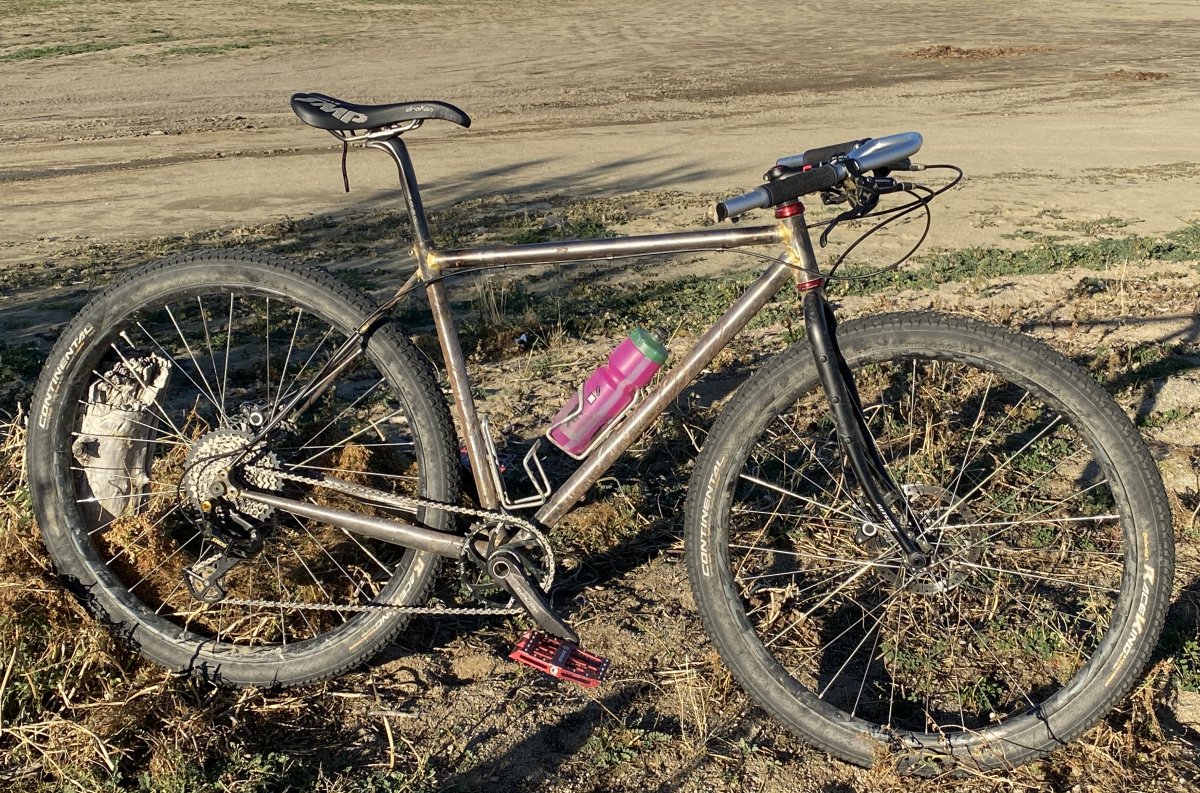
While messing with the Jones bars I was trying to open up as much hand real estate as possible without brake and shift levers leaving uncomfortable bumps in the way. I've seen from Mike Curiak that SRAM still makes a Grip Shift in 11 speed X-actuation. I haven't had a Grip Shift in 20 years, but since the shifter is smooth and the pull ratio is almost identical to Shimano Dynasys, I grabbed a cheap one off of eBay to try out.
Verdict: they shift fine. I've forgotten how convenient it is to dump gears quickly. I can't say I prefer it for downshifting compared to a paddle. It is smoother under your hand, but it is bulky. I'll keep it in the partsbin since it does have one interesting feature: for an adaptive application it could be run on the left side of the bar.
While doing all this handlebar swapping and tweaking, I eventually got to the point where I realized I was really was just wasting my time. Yes, I enjoy messing around with bikes and understanding them better. But it seemed like drops and their roadiness were at the center of things. I went back to some wider, comfortable drops, and for even more comfort, got some R7000 shifters to run on it. Not to get off-track but since I only run 1x these days I figured out how to lock out the left side shift lever with this 3d printed shim I designed.
And believe me, I'm not anti-drops. I've ridden road bikes since the 80s, and they're not a barrier off-road from racing years of cyclocross on drops. I even had the full WTB dirt drop setup on my mountain bike back in the 90s.
After doing all this aero-hacking, I was increasingly thinking about two other truths:
- No matter how low you get your drag, the rider on your wheel has even less.
- The gains keep getting smaller and smaller in terms of actual speed.
The second point is really interesting to me lately with the 32 inch hype. If the bigger wheel has 10% less rolling resistance, if you put those watts into going faster they get exponentially eaten up by drag. You are always at the mercy of the wind, and the harder you go the more it slows you down. Or in other words, going fast is bullshit.
I love the high-ish sweep Soma Dream bars on my other two bikes, so I started thinking about going flat on my gravel bike. However, it's too short to make those bars work. I'd need a 150mm stem to get close. The gravel bike, as nice as it was, seemed like a dead end. So I took it apart to save space. But that left me with just a geared fat bike and a singlespeed trail bike.
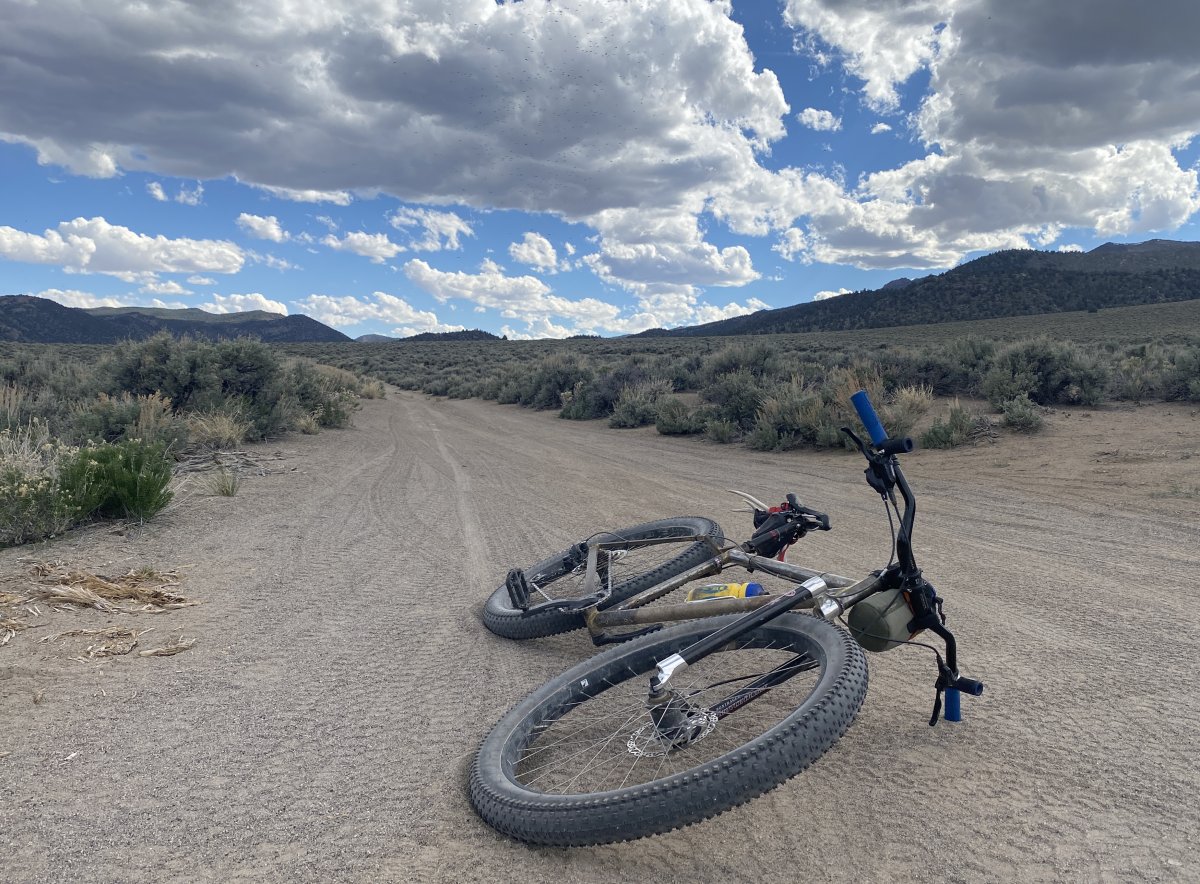
I did have an option to fill the hole: #15, my bikepacking frame that got decommissioned by the fat bike. Since both the gravel frame and the bikepacker are SuperBoost, I could potentially move the wheels across and built it up as a flat bar, rigid forked, "gravel" bike. There was one catch though: the bikepacker is 1 1/8 only, and its fork had QR dropouts. The gravel bike's front wheel was Boost TA.
The bikepacker's original 29+ wheelset with WTB Rangers was still set up, so I used those as a starting point. I built it up as a "gravel ATB" with slightly higher gearing and a slightly longer stem to get a little more stretched out. But on my first ride in the cul-de-sac there was something really strange about it - it flopped terribly when cornering! I didn't remember it handling like this when I rode it last. Maybe I had gotten used to the high offset fork on the single speed?
In the Shed Of Possibilities I had an old Bontrager carbon 29er QR fork that was shorter, so I swapped that in to steepen up the head angle a little. That helped, but something was still off. Riding it on twisty singletrack I could not get it to behave in corners. It would lag to the outside then plunge to the inside. This wasn't a particularly floppy front end based on the numbers so I couldn't figure out what was going on.
I did notice something interesting - if I had my hands further inwards the cornering was slightly better. So it has something to do with position and the interaction with the bars. Leverage maybe? Go back to troubleshooting rule #1: What changed? The stem length. Since the bars are so wide the stem length doesn't change the leverage significantly. Maybe weight distribution is changing the flop force? But it's really not that different from before.
Look closer at what's happening. Break up the problem_. First stage of the poor handling is the bike not steering. Maybe it can't steer? Of course! The wide bars move the grips mostly forwards and backwards, and with the longer reach I wasn't able to give the bars the slack to let the front end turn into the corner. But wide bars should control flop, right? The next piece clicked - the flop isn't the problem, it's the symptom. Since the front end can't steer in, the bike is falling over, then flopping, not flopping into a death spiral. Cause and effect were swapped!
Coming off of several drop bar gravel bikes, I've tried them with long and short stem geometries and have always preferred traditional longer stems with drop bars. And now it was really clear why. When you're stretched out you can't really steer by having your hands move front and back. I already felt like these "progressive" gravel bikes didn't handle well and I blamed it on too much flop from slacker head angles that couldn't be controlled by the narrow bars. This experiment revealed something new to me - the more stretched out you are, the more you want to control your steering with a "tiller" set up that moves side to side.
This also better explains the Bike Wisdom that short stems on road bikes are twitchy. Certainly, short stems aren't twitchy on mountain bikes otherwise we would have stuck with 80s 150mm stems. But also, that's not a holistic view when you take everything else different about mountain bikes. I've also wondered where that observation came from - if you put a short stem on your road bike it won't fit right and you can't expect it handle well if you're cramped and stuck behind the front wheel, unable to weight it. Did people really get a chance to try short stems with long top tubes that compensated for the difference? I've always been skeptical and have considered it being one of those "toughen up, buttercup" excuses for uncomfortable bikes, but this has me seeing some validity to the concept.
Now I can't unsee it though. I was watching a Youtube video hyping some pro racer's "long and slack" race machine, and there's a part where the racer is following the Youtuber down some mellow singletrack. The pro couldn't ride a smooth line and was just ping-ponging between the two edges of the trail. At first I thought it was just the funky optics and stabilization of the action cam, but no, this cutting edge gravel bike appears to handle like shit.
So - the solution: shorter stem. Now the bike handles well. I would like to stretch out a little just for cruising comfort, so I added some bar-ins. Nothing fancy, just some old generic 90s bar-ends cut stubby with a piece of grip for extra comfort. So as a "All Gravel Bike" this bike is working pretty good. I haven't tried to find a fork (or a different front wheel) to run the Race King tires. The Rangers have been fine for now.